Big Data vs. Industries

Hey Readers, it is our third post, and if you have not read the previous ones, please check them out. Is not your first time here? We really appreciate your visiting.

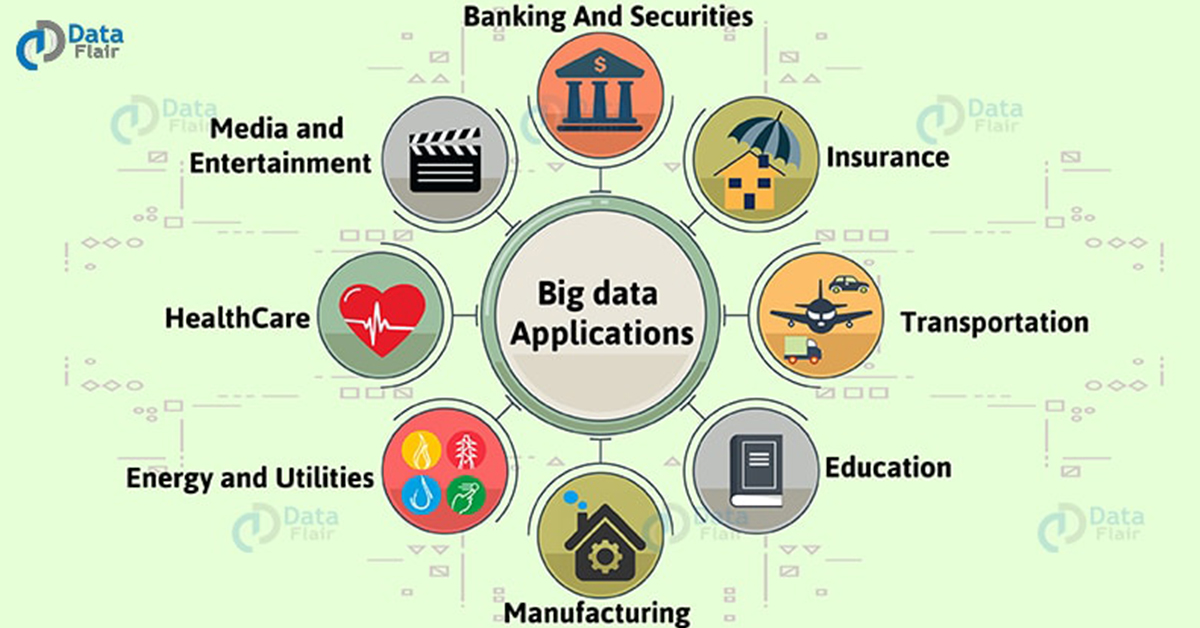
Big data is possible to be used in diverse industries, we would say, in all types of business. To illustrate this, we selected three distinct industry to prove that.
Medicine

It’s becoming even more common the use of Big Data in the Health Industry. It is capable to analyze huge amounts of data and compare it with structured and unstructured information to identify and suggest prescriptions to treat illnesses and improve quality of life.

Real time trackers are being used along with Big Data to provide even more quality and quickness in diseases prevention. With special algorithms it can analyze heartbeats and breathing patterns from a patient and predict infections 24 in advance of any physical symptom.

Education

Schools, Colleges and University are taking advantage of Big Data to find improved education approaches using the large amounts of data generated everyday. There’s a change in the way we learn, and Big Data has a great part of it.

And this is not only restricted to the knowledge itself. Everything related to education is being affected, from classroom sanitation to school bus routes.

Sports

Big Data is used everyday in professional sports, from Football to Rowing, it helps elite athletes to improve their performances.

Football teams installed cameras around their stadiums to track each player, using analytics combined with advanced hardware. A similar approach is used by NFL players, that are using sensors in their pads to obtain even more details to expand their results.

One exciting aspect of Big Data is its dynamism, as we saw in the three industries with totally different applications. It is not an immutable science, but rather a powerful tool that you can adapt, customize and use into your business. Connect your knowledge with this new world, and you will be opening new doors for your success.

References

Marr, B. (2019). How Is Big Data Transforming Business? Retrieved from Bernard Marr & Co.: https://www.bernardmarr.com/default.asp?contentID=767

Matthews, K. (2018, August 13). 5 Industries Becoming Defined by Big Data and Analytics. Retrieved from Towards Data Science: https://towardsdatascience.com/5-industries-becoming-defined-by-big-data-and-analytics-e3e8cc0c0cf
Big Data Applications

Hey Readers, welcome back to our second post. If this is your first visit to our blog, please click here and check our first post out. You will find essential concepts to comprehend the next posts better.

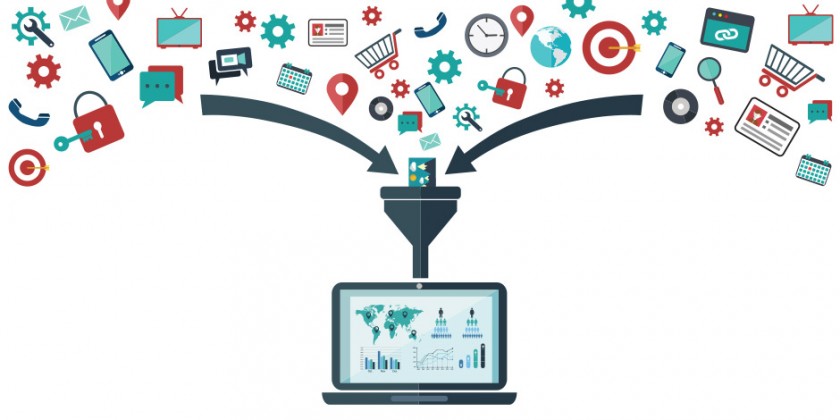
Now that you know (more) what is Big Data, perhaps you are asking yourself how it can boost your business. Let’s list the three most important use cases in our view.

Comprehensive Assessment of the Customer

Imagine if you could have all the information regarding your customers in one place. Name, addresses, income, sales information, past interactions with your company, transcripts of calls, e-mails and chat. Sounds excellent right?

Big Data can do that and more!

Using advanced analytics and machine learning tools, it can provide in advance, why a specific customer is calling. Big Data can also propose opportunities for cross-sales or even alert for a consumer changing to the competition. Advanced Big Data dashboards can also detect your customer feelings, suggesting appropriate responses to your sales team.

Price Optimization

The main objective of any business is to maximize income. Big Data allows you to optimize your price to achieve the best result possible.

It will seek which price points generated the best outcomes under various market circumstances, allowing better strategies for your company. Big Data also allows a database segmentation with different templates simulating what customers will be willing to pay under different situations.

Operational Efficiency

Big Data also acts on the Operational side of the Businesses. It will incorporate lots and different reports, offering a vast analysis range so you can identify and solve possible problems. As a retailer, for example, it could highlight a lack of sales for a specific product, on a precise location and possible reasons. This will keep your company less dependent on human analysis only.

There are many other uses for Big Data (see it here) and not necessarily you need to apply all into your business. Actually, you do not have to use Big Data, but if you desire to keep competitive in the long term, at least start to think about it. The developments in the field are leaving it more accessible for all types of business.

References

Harvey, C. (2017, June 21). Big Data Use Cases. Retrieved from Datamation: https://www.datamation.com/big-data/big-data-use-cases.html

Do you know what is Big Data?

Hey Readers, welcome to our new blog. This is the first post and we summarized the core of what we expect to be a very informative content for your business or your professional life.

Our first “million question” is: Do you know what is Big Data? Have you ever heard this expression? If your answer is “no” for both, you are in the right place. However, if your answer is “yes” please do not leave us, we will bring a lot of news involving Big Data in the business world that certainly will boost your knowledge.

If you never heard of Big Data before, watch the video below:

Let’s begin by the beginning. In short, Big Data is defined by a massive amount of data coming into a variety of forms and in high speed into businesses every day. To make it simple, we can say that 5 Vs compose Big Data:

1 – Volume

Big Data process high volumes (hundreds of petabytes!) of different types of data (check our “V” number 3!)

2 – Velocity

All this information is received at a breakneck speed and must be treated in real time.

3 – Variety

Data comes in many different forms, from structured, as regular databases, spreadsheets to unstructured ones, as social media feeds, emails, videos, audios, financial transactions. This list can go on and on.

4 – Value

The value of the information is intrinsic. The data is there, what you with it it’s the critical part.

5 – Veracity

It will only be significant if it’s reliable! All these data should be captured in a trustable way.

Ok, after all these details, we know what you are asking… Why is it so important? What are the benefits?

As Koffi Annan, former most important Secretary-General of the United Nations used to say, “Knowledge is power.”

If companies can transform all data (I mean, really ALL data) that arrives into knowledge, they can improve almost every aspect of the business. From Product Development to Customer Experience, from Operational Efficiency to Fraud and Compliance.

All these leading to the whole purpose of business: PROFIT. If you are interested to know more about the technical definition of Big Data check these Link 1 and Link 2 out. Please stay tuned that we’ll go more in-depth on the next few days about how Industries are using Big Data to solve their specific problems.

References

Big Data. (2019). Retrieved from SAS: https://www.sas.com/en_us/insights/big-data/what-is-big-data.html

What Is Big Data? (2019). Retrieved from Oracle: https://www.oracle.com/big-data/guide/what-is-big-data.html